



osy Blue is one of the world’s largest diamond manufacturers and, despite having plenty to boast about, one of the most discreet. The Rosy Blue story began in 1960 when Bhanuchandra Bhansali and his nephew, Arunkumar Mehta, set up a small diamond trading business in Mumbai, naming it B. Arunkumar & Co.
The business thrived under their leadership, expanding step by step to become a major player. First, in 1969, B. Arunkumar & Co. became a De Beers sightholder. Next came international expansion with the opening, in 1973, of offices in Antwerp, followed a year later by New York and Hong Kong. To match this international identity, the company changed its name to Rosy Blue, in reference to two rare diamond colours.
Rosy Blue is a pioneer in sustainability. A founding member of the Responsible Jewellery Council (RJC), it was one of the first in the diamond and jewellery industry to set up a Corporate Social Responsibility (CSR) department, in 2008—well before anyone else—and the first diamond company to sign the UN’s Women’s Empowerment Principles.
A family-owned conglomerate employing more than 3,600 people worldwide, Rosy Blue operates diamond cutting and polishing factories in India and Botswana, and jewellery manufacturing units in Dubai, India, China, Hong Kong, Japan and Thailand. In 2024 Rosy Blue acquired a watch and jewellery manufacturer in Geneva, and last year opened a coloured gemstones facilities in Thailand.
We met Ravi Bhansali—CEO and Managing Director at Rosy Blue NV, and grandson of one of the two founders—at GemGenève in May 2025. He spoke at length about the group’s history, its offices in Antwerp, its philosophy, its recent interest in Swiss watch and jewellery manufacturing and in coloured gemstones, challenges facing the industry and why being a diamantaire is such a captivating profession.

Europa Star Jewellery: Where does the Rosy Blue name come from?
Ravi Bhansali: When the company was established in 1960, it took the name B. Arunkumar & Co., after its two founders: my grandfather, Bhanuchandra Bhansali, and his nephew, Arunkumar Mehta. When one of my uncles opened our first overseas office in Antwerp in 1973, he felt we needed a name that resonated internationally. He proposed Rosy Blue, inspired by two exceptionally rare diamond colours. The intention was to convey the rarity not only of the stones we work with but also of the service we provide. In time, the Belgian subsidiary’s name became the name of the entire group.

To what extent is this a profession passed from generation to generation and to what extent is it new and evolving?
One of our great strengths is the balance we’ve created between family and professional leadership. Every multi-generational company faces inherent limits and many do not survive beyond the third generation. From the beginning, Rosy Blue adopted a hybrid model: the ownership and strategic direction remain within the family, but we rely on talented professionals in key roles. That combination, continuity with professional expertise, has allowed us to grow steadily. Today, the grandson of the second founder and I represent the younger generation, working alongside our fathers. With 3,600 employees worldwide, the only sustainable way to function is for the family to avoid micromanagement, empower experts and give people room to grow, even to make mistakes. Our longevity rests on this blend of family values and professional governance.
Of all the rough diamonds you’ve purchased, which is the most beautiful?
A truly remarkable stone we acquired in Angola nearly twenty years ago stands out. I was just entering the business, and while I can’t disclose all the details, I can say it weighed over 300 carats in the rough. We purchased it with two partners, spent four years analysing and planning the cut, and another five years seeking the right buyer, ultimately a private collector in Hong Kong. Apart from world-famous diamonds, it remains one of the largest and rarest stones ever unearthed. Being part of its journey was unforgettable.
Is there a particular stone that is ingrained in Rosy Blue’s history?
There is one stone that has become almost legendary within Rosy Blue. In 1985, when I was a year old, my great-uncle was meeting with the Oppenheimer family in London, major shareholders of De Beers at the time. In conversation, he mentioned that Rosy Blue was celebrating its 25th anniversary. Nicky Oppenheimer left the room and returned with a magnificent 95-carat diamond, offering it to us on highly favourable terms to mark the occasion. After it was cut into a 30-carat heart shape, my great-uncle brought it back to him and said, “From your heart to mine.” That simple gesture symbolised the deep bond between our families.
Do you still have it?
No, we no longer own it. Many historic stones have passed through our hands, pieces I would love to keep, but part of being a professional is knowing when to let them go. Still, if I ever came across that particular diamond again, I would do everything possible to buy it back.

Which of these three criteria is the most important when evaluating a rough diamond: the potential yield, the probability that it will be awarded a certification or how closely it matches a client request?
For us, all three criteria are essential: potential yield, the likelihood of certification and how well the stone aligns with a client’s needs. We always ask ourselves whether a stone suits the aesthetic and philosophy of the clients we serve. Provenance is also fundamental; our clients strongly favour diamonds with documented origins. When a rough aligns with client expectations, meets traceability standards and shows strong potential, that’s the ideal combination.

You mention traceability. Rosy Blue is a founding member of the Responsible Jewellery Council. You set up a CSR department in 2008 and appointed a team in charge of sustainability and compliance well before anyone else. What was the thinking behind this?
These decisions were taken by the generation before mine. My father and uncle were pioneers—they recognised early on that social responsibility would become central to the jewellery industry. We were among the first to create a formal CSR department in 2008 and to publish annual reports beginning in 2011. Our family had long supported educational and social projects in India, but often informally. Institutionalising CSR allowed us to secure these initiatives for the long term and extend them to Botswana, Belgium and other regions where we operate. Over time, CSR became deeply integrated into our corporate strategy, spanning compliance, sustainability, supply-chain integrity and traceability. What began as a family commitment has evolved into a core pillar of the company.
Where do you think the sector falls short in this respect?
I wouldn’t say the industry falls short, especially the diamond supply-chain has evolved tremendously to meet the needs of the day. But I do believe the entire gem and jewellery industry would benefit from greater coherence. Many strong initiatives exist, yet often in parallel. With more collaboration across the supply chain—upstream, midstream and downstream—we could achieve more unified standards and maximise impact. Traceability and responsibility must never become box-ticking exercises. Whatever we do, we have to stay focused on purpose.
When did you realise the structural impact these initiatives were having on the company as a whole?
Our first societal report in 2011 was an eye-opener. Between 2011 and 2013, companies we deeply admire, clients as well as upstream mining partners, approached us asking for guidance on improving their own practices. We had never imagined playing such a role. We are a midstream player and are modest about our position in the pipeline compared with some of these groups. Yet their interest signaled that the desire to take responsible actions can come from anywhere and that it was becoming systemic across the industry. Today, there is widespread collaboration. Conversations no longer revolve solely around products and pricing; they now include broader societal impact, which benefits everyone.
Lab-grown diamonds have disrupted the market. Is this one of the reasons you’re diversifying into coloured stones?
To clarify, synthetic diamonds have disrupted certain segments, primarily the more accessible jewellery category. There has been some consumer confusion and at times misleading messaging. But customers are becoming more educated and understanding the difference between price and value. And as far as Rosy Blue’s European operations go, we serve the world’s leading luxury houses and in that high-end segment, lab-grown diamonds have had virtually no impact, as these are truly the champions of value generation.

But they have put pressure on prices.
Lower-quality goods have indeed faced pricing pressure from synthetics, but the market dynamic is far more complex. The surge in demand during the pandemic caused prices to nearly double between 2019 and 2022. Much of today’s decline simply reflects a correction from that extraordinary peak. Meanwhile, exceptional stones, particularly coloured diamonds, remain incredibly strong, with many reaching record prices. The overall picture is more nuanced than a simple downward trend.
So why did you decide to enter the coloured stones market?
We diversified because we recognised that our market share in diamonds had stabilised and that coloured stones were experiencing strong demand as well as a need for structuring. We believed we could bring two things, in our own humble approach, to this sector’s needs: stability and traceability. We are not entering aggressively; we are building carefully, purchasing only for meaningful projects and prioritising origin-verified stones. Our aim is to apply the best practices we’ve mastered in diamonds to coloured gemstones, contributing to more transparency in a sector that still lacks it.
Coloured stones are an entirely different sector that requires a different set of competencies. You can’t see through a rough emerald, you don’t know what you’ll be left with after cutting. Ensuring traceability is complicated. How do you manage coloured stones?
We’re building this activity step by step. Coloured stones require a completely different expertise. Traceability is far more challenging as well as risks of misleading treatments on the stones. We’ve partnered with specialists between Bangkok and Geneva, pooling complementary skills. We’re launching as a selective, niche operation focused on specific client needs rather than volume.

You have cutting factories in Mumbai, Surat and Botswana. How do you share manufacturing between these sites?
Manufacturing is divided according to each centre’s strengths. Over time, every facility has developed unique specialisations. Botswana is dedicated to larger, exclusive stones, since access to such rough requires a local presence, an arrangement that benefits both the country and us. All other stones pass through Mumbai, where we adjudicate which of our Mumbai or Surat factories is best equipped for each piece. We also have a studio devoted to highly advanced, bespoke cuts, including patented shapes and custom designs for major brands. We like to say: there is no diamond we cannot cut.
What’s the most astonishing shape you’ve given to a diamond?
Without naming the brand, I can say that every luxury house has its emblematic animal. For one of them, we cut an entire diamond into the silhouette of that creature. It was for a private client and required extraordinary precision. We spent more time developing the technology than executing the cut. The process was nerve-racking: one wrong move and the stone could have broken. It took three years to deliver and it felt as much like engineering as jewellery.
So something similar to glyptic?
It is far more complex. Lasers can handle the early shaping, but the refinement, the final detail, is extremely intricate. That is where true mastery is required.

In terms of employment, which do you consider most important: training, employee retention or skills development?
Training is by far the most important. Proper training takes at least eighteen months and it’s a major investment. If someone leaves after two years, it’s a double loss. We’re proud of our very low turnover. We make every effort to retain our teams and protect employment through both strong and difficult markets. Stability builds loyalty and loyalty is the foundation of our strength.
Are there stones you don’t allow into your factories and why?
We do not work with stones from conflict zones or stones subject to sanctions. The reasons speak for themselves.
Regarding traceability, at what point in the chain—purchase, assorting, planning, manufacturing—would you say trust is at stake and where are your weaknesses, if any?
We’ve invested heavily in end-to-end traceability, technology, controls and systems that safeguard the supply chain at every step. Industry-wide, traceability has advanced enormously. Testing methods today are exceptionally robust. Within our facilities, every transfer between departments is logged and verified. The stone that goes in is the stone that comes out. The cost is significant, but it allows us, and especially our clients, to sleep well. Our reputation is non-negotiable.
In August 2025 you opened a coloured stones manufacture in Thailand. Why is Thailand a key location? Is it expertise in cutting, access to the market, assorting or the country’s culture of precious stones?
You’ve named nearly all the reasons. Thailand offers access to both rough and polished goods, a large and skilled workforce, deep cultural expertise and a steady domestic market. It is also politically stable and welcoming to business. Precision is essential in coloured stones and Thai craftsmanship excels at precision.
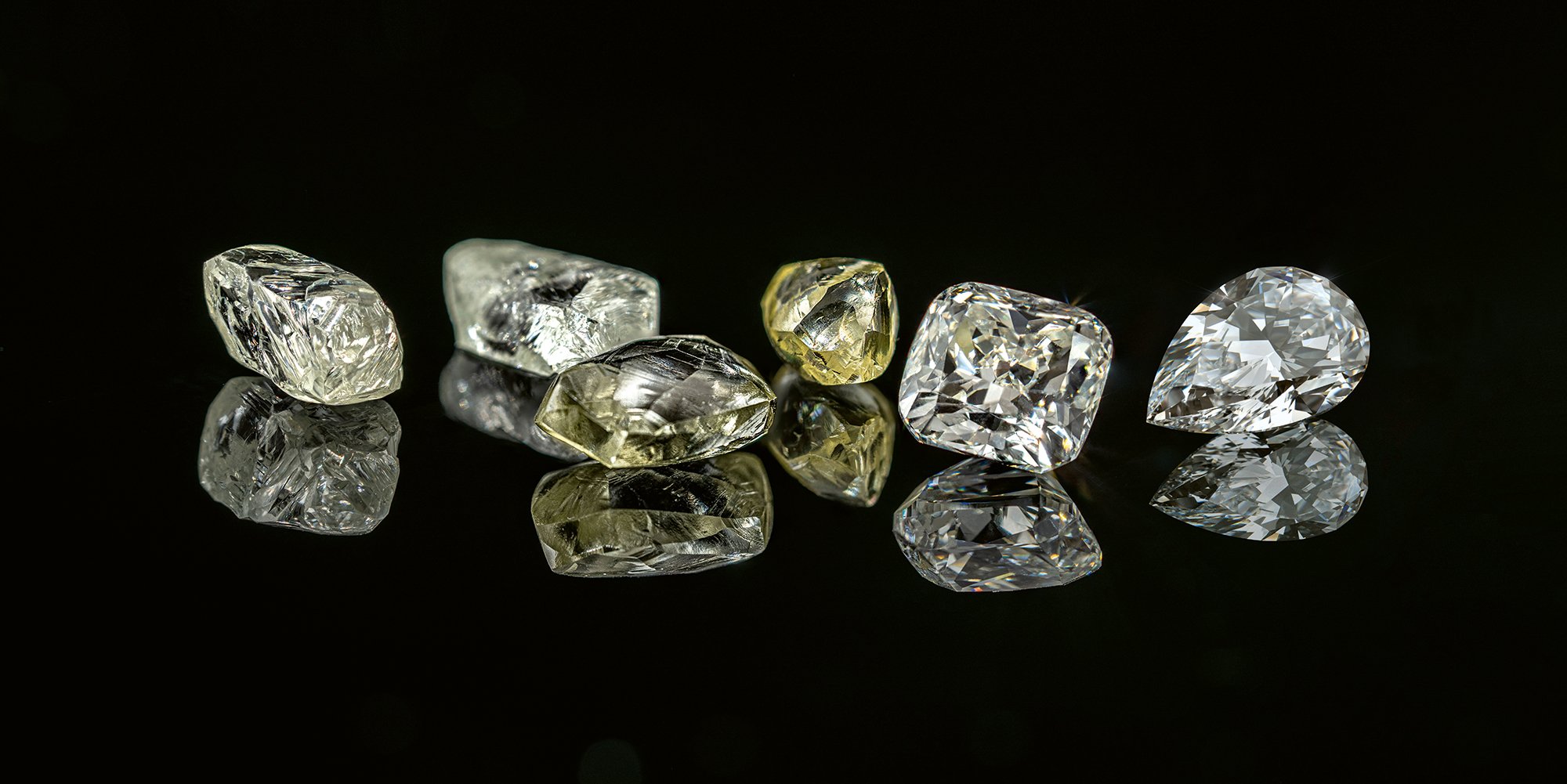
You’ve seen diamonds go from objects of great mystery and beauty to ultra-analysed products that are tracked and compared. In your opinion, what intangible aspect must diamonds retain in order to conserve their significance?
It’s true, diamonds have become heavily analysed stones, measured and compared in ways unimaginable decades ago. But we must never forget the magic. Natural diamonds are billions of years old, older than trees on Earth, older than most forms of organic life. Look around your home; very little in it is even a century old, or will survive in a century. The oldest object you own is likely on your finger or your wrist. Diamonds predate the dinosaurs. And in another billion years, they will remain. It may sound esoteric, but diamonds are the oldest physical things we can touch and I personally feel they connect us with eternity. There is something undeniably cosmic about that.
What is it about this industry that still fills you with wonder?
What continues to inspire me is the meeting point between history and the future. Despite all the modernisation, technology, reporting, management, our industry retains traditions that have survived for generations. Deals are often sealed with a handshake and a simple “Mazal” (see page 48). Many practices are exactly as they were when my grandfather began in 1960. Few industries can claim such continuity. This is a profession built on trust, reputation and honour. That is something truly beautiful.
Even for the biggest roughs, saying Mazal, with no written contract, is binding?
Yes. Even for major transactions, a handshake and the word “Mazal” are binding. The invoice follows, but the agreement is sealed in that moment. You might see a merchant in a small Indian village and a trader in Dubai finalise a deal with this Yiddish word—perhaps without knowing its origins. It transcends cultures, communities and religions. It is a remarkable legacy and whoever first uttered it gave us something timeless. It is the strongest symbol I’ve ever seen of the value of a person’s word and reputation.


